Heads up: some links on this page are affiliate links (Stay22, Viator). If you book through them we may earn a commission at no extra cost to you. It never changes what we recommend. How this works.
Maui in January is warm enough for beach time, but it is also winter: expect occasional rain, bigger surf conditions to watch for, and some of the best whale-watching of the year. It’s a good fit if whales and outdoor time matter more than getting the lowest room rate.
January and February are both in the main humpback season. For weather, the south and west sides are generally drier than Hana, Haiku and Upcountry, while the ocean is still comfortable for swimming and snorkeling when conditions allow.
Quick answer: January averages around 80°F for daytime highs and about 64°F at night, with local conditions varying by area. February is broadly similar, and both months fall within the January-to-March peak for whale abundance. Book whale trips ahead, pack a light rain layer and check surf and beach conditions on the day.
What is Maui weather like in January?
Monthly averages give a useful baseline, not a forecast for your beach or travel dates. One Maui weather summary lists January’s average high at 82°F and low at 64°F, with average rainfall of 3.5 inches and ocean temperature of 75°F. A separate historical model puts daily highs near 81°F and lows near 65°F, with the chance of a day receiving measurable rain around 21%. Those figures use different methods, so think warm days, mild nights and a chance of showers rather than a guaranteed dry week. See the monthly summary from Maui Hawaii and the historical averages from Weather Spark.
Rain is not spread evenly across the island. Winter showers are more common on the windward northeast side, including Hana, Haiku and Upcountry. Kihei, Wailea and the west side around Lahaina are usually drier, though no area is guaranteed sunshine every day. The seasonal pattern and regional contrast are described by Hawaii Guide.
January’s average temperature figures can look different from one source to another because some summarize Maui broadly and others use a particular station or historical model. For Kahului, NOAA climate normals quoted in a clothing and weather guide put the January high at 82.2°F (27.9°C) and low at 63.6°F (17.6°C). The same guide gives an average of 2.42 inches of rain. Pack for daytime warmth, but keep a layer handy for evenings, wind and a rainy drive. The Kahului figures are reported by Put Together.
For a wider month-by-month comparison, use our Maui weather by month guide, and check the island’s regional patterns in our Maui weather overview. Then check the forecast close to departure; historical averages cannot tell you what the trade winds or rain will do during your specific stay.
Is Maui better in January or February?
Neither month is a clear winner for every traveler. January has a slight edge if you want the earliest part of peak whale season and don’t mind a higher chance of rain in some monthly averages. February remains a strong whale month and may be a little drier, depending on which climate summary you use.
| What to compare | January | February |
|---|---|---|
| Average high and low | 82°F high, 64°F low | 80°F high, 63°F low |
| Average rainfall | 3.5 inches | 2.4 inches |
| Average ocean temperature | 75°F | 74°F |
| Whales | Peak-season month | Peak-season month |
The temperature and rainfall figures in the table come from the same monthly weather summary, which gives January a high of 82°F and February a high of 80°F. Another source’s Kahului figures put the average high at 82.2°F in both months, and rainfall at 2.42 inches in January versus 2.00 inches in February. The difference between sources is a reminder to treat averages as a guide, not a promise. The monthly figures are from Maui Hawaii and Put Together.
For a January-specific view, a separate climate site estimates Maui’s daytime January temperature at about 26°C and its sea temperature at 25°C. It also rates January highly for weather, while flagging crowds and prices as elevated. That is a useful broad signal, but it is not a Maui hotel rate forecast. February’s comparison on the same page gives a similar daytime temperature and 24°C sea temperature. See Where and When for its month-by-month methodology and estimates.
How good is whale watching in Maui in January?
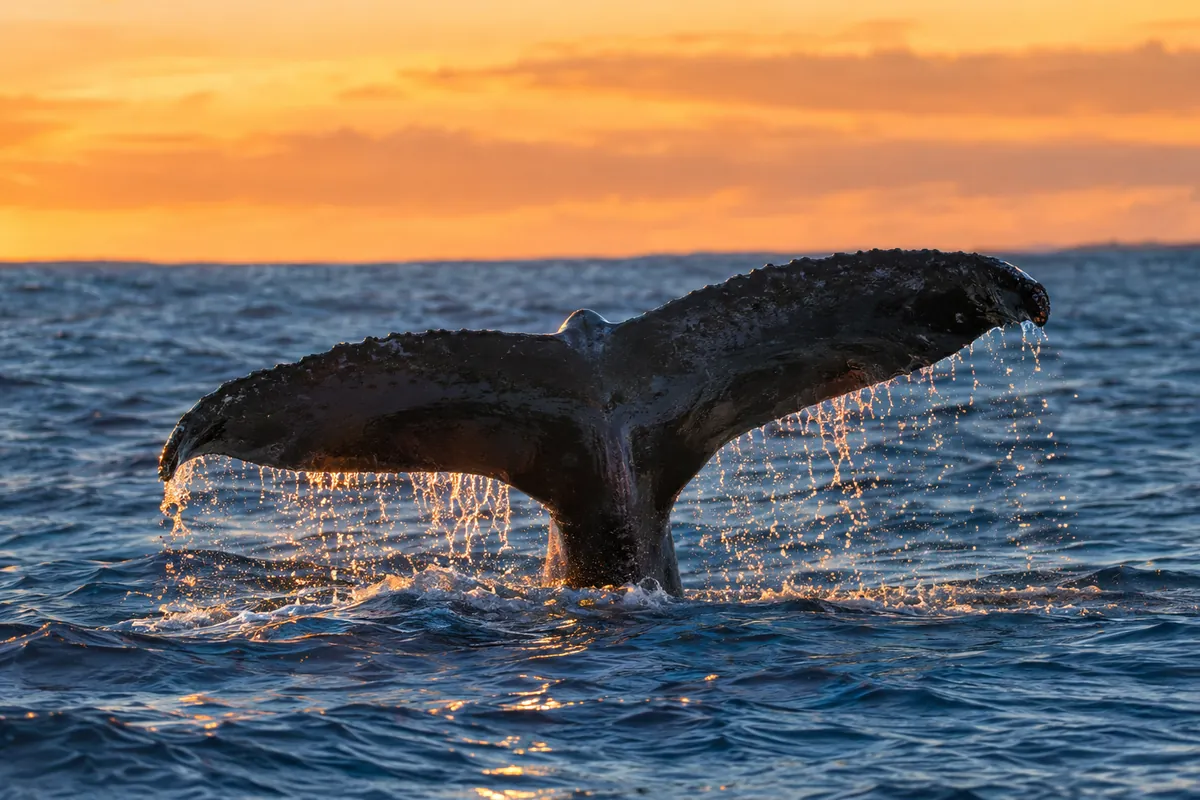
January is one of the strongest months to plan a whale trip. Humpbacks migrate from Alaska to Maui’s waters between December and May, and January through March is identified as peak whale-watching season. The Auʻau Channel, between Maui, Lanai, Molokai and Kahoolawe, is described as important breeding habitat and a major whale area. Seasonal information and the harbor overview are in Hawaii Guide’s Maui season guide.
Trips commonly leave from Lahaina and Maalaea, and the seasonal guide reports that tours from those harbors often find multiple pods soon after leaving. That is not a guarantee of a sighting on any particular departure. For current tour formats, harbors and booking details, compare options in our Maui whale-watching guide. If a boat trip is central to your plans, reserve a spot before arrival rather than leaving the decision until the last day.
Give whales room. The NOAA sanctuary guidance summarized in the January clothing and weather article says boats, swimmers, paddleboards, kayaks and drones must stay at least 100 yards away. Follow crew instructions and current sanctuary rules, and don’t approach whales from the water. The distance guidance is reported by Put Together.
January can also bring brisk wind on an open boat. A windbreaker, long sleeves, a brimmed hat that stays put and shoes with grip are practical choices for a potentially wet deck, as recommended in the same January clothing guide. Bring sun protection too, even when clouds are around.
What about winter surf and swimming?
Winter is a time to pay attention to surf advisories, especially if your plan depends on calm water. An AccuWeather page for Maui Meadows displayed a High Surf Advisory, and its January calendar showed highs from 78°F to 82°F and overnight lows from 64°F to 71°F. That page is a snapshot, not a forecast for every coast or every beach. Check the current advisory and beach conditions before you get in the water: AccuWeather’s Maui Meadows monthly page.
Average ocean temperatures of 74°F to 75°F make water time appealing for many visitors, but temperature alone says nothing about waves, currents or safe entry. Don’t treat a sunny beach as a safe beach. If the surf is rough, choose another activity and follow posted warnings and lifeguard instructions. For options by coast, see our Maui beaches guide and the snorkeling guide.
Winter rain can make waterfalls fullest from January through March, according to the seasonal guide, which can be a nice bonus on a Hana drive. It can also mean wet roads and changing conditions, so don’t plan a packed driving day around a single waterfall or assume every stop will be accessible. Check road and site conditions before setting out. The seasonal waterfall note is from Hawaii Guide.
Where should you stay in January?
If reliable sunshine is high on your list, start by comparing Kihei, Wailea and West Maui. The seasonal guide describes South and West Maui as drier year-round than Hana, Haiku and Upcountry. That is a regional tendency, not a promise that it will stay dry at your hotel. If you want a quieter, greener trip and don’t mind more rain, Hana or Upcountry may suit you better.
January follows the Christmas and New Year holiday period, when prices and crowds rise, and January is still described as a high-demand month. The sources do not provide a dependable January room-rate figure, so compare actual dates and the full stay cost rather than relying on a seasonal estimate. Spring and fall are described as less expensive accommodation seasons because demand is lower, but that does not mean every January property is full or every spring room is a bargain. Seasonal pricing context comes from Hawaii Guide and the crowd and price ratings from Where and When.
For a first trip, compare areas before picking a hotel: where to stay on Maui covers the main bases, while our Maui hotel shortlist compares properties by area and budget. If whale watching is your priority, choose a base that makes the harbor you plan to use convenient, then check the tour operator’s current departure details.
What should you pack and plan for?
Pack light clothes for the day, a layer for evenings, and a rain shell that fits in a day bag. If you’re heading to Haleakala, bring warmer layers: the January guide gives average nighttime lows of 53.1°F in Kula and 43.9°F at Haleakala park headquarters. It also reports that pre-dawn temperatures at the summit can fall below freezing. Confirm current park conditions and reservation requirements before making a sunrise plan; the guide’s temperature information is at Put Together.
January daylight is limited compared with summer but increases through the month. Weather Spark estimates about 10 hours and 54 minutes of daylight at the start of January, rising to 11 hours and 14 minutes at month’s end. Plan your driving and outdoor stops with daylight in mind, particularly if rain or cloud slows the day. See Weather Spark’s historical January data.
For a whale watch, pack a wind layer and secure hat; for a beach day, check conditions before swimming or snorkeling. If the forecast turns wet, don’t force a long outdoor itinerary. Maui’s weather shifts by region, so a rainy forecast in Hana does not necessarily mean the same conditions in Wailea, and vice versa.
How we researched this
We compared published monthly weather summaries, historical weather-model averages and seasonal travel guides, including NOAA-based climate normals quoted in a published January guide and whale-season information attributed there to NOAA’s sanctuary. These sources use different locations and methods, so we’ve identified averages as estimates and avoided presenting them as forecasts. We did not receive payment from any business mentioned.
Before you go
January is a good choice if you want peak-season whale watching, warm daytime weather and a chance to see winter waterfalls. Choose a drier-side base if rain would frustrate you, and don’t build the trip around a promise of calm surf or clear skies. February offers much the same whale-season appeal, with some averages showing less rain, but the day-to-day forecast matters more than the small difference between monthly averages.
Frequently asked questions
Is Maui in January a good time to visit?
Yes, if whale watching and warm daytime weather are priorities. Expect occasional rain, winter surf conditions to monitor and higher demand than in quieter seasons.
What is Maui weather like in January?
Monthly averages put daytime highs around 80°F to 82°F and nighttime lows around 64°F to 65°F. Rain is more common on the windward side, while South and West Maui are generally drier.
Is January or February better for whale watching in Maui?
Both are in the January-to-March peak whale season. January is a strong choice, but February also falls within the peak period; sightings are never guaranteed on a particular trip.
Is Maui in February warmer or drier than January?
It depends on the source and location. One monthly summary gives February slightly cooler highs and less average rain, while Kahului figures quoted in another guide show nearly identical highs and a small rainfall difference.
Can you swim in Maui in January?
The average ocean temperature is around 74°F to 75°F, but temperature does not indicate whether a particular beach is safe. Check surf advisories and local beach conditions before entering the water.
Sources we checked
- Maui Hawaii: Monthly Maui weather averages and ocean temperatures
- Weather Spark: Historical January temperature, rainfall, wind and daylight estimates
- Hawaii Guide: Maui seasonal weather, whale season and winter rainfall
- Put Together: January weather, NOAA-based Kahului normals, whale guidance and clothing
- Where and When: January weather estimates, crowds and monthly comparison
- AccuWeather: Maui Meadows monthly weather and surf advisory display
About this guide
Written and fact-checked by the Maui Hotels Blog editors, an independent team that plans Maui trips from official and published sources. We compared 6 sources for this page, linked each one above, and were not paid by any business mentioned. Prices, fees, hours, reservation rules and ocean conditions change, so confirm with the official source before you go.


